It’s budget season again, and most CROs are running into the same wall: despite investing in strategy, headcount, and tools, results aren’t moving fast enough.
Why? Because there’s a gap.
I call it the Sales Performance Gap—the missing link between the plans you make at the start of the season and the outcomes you expect at the end. And if you’re feeling it in your org right now, you’re not alone.
Why the gap exists
- Seller productivity is stalling. Reps aren’t converting at the level leaders expect—and the gap between top and mid-level performers is widening.
- Managers are stretched thin. Instead of coaching, they’re call-to-call supporting teams, buried in prep, and expected to act like analysts—synthesizing data across multiple systems.
- Automation and AI are adding confusion. Tools promise shortcuts, but without clear process and coaching, they become excuses, not solutions.
- ZIRP hangover. A decade of easy money created tech bloat, team bloat, and misaligned expectations between roles and responsibilities. CFOs are still cutting, CROs are realigning, and the performance gaps are even more stark.
Without closing the gap, mid-level performers stay stuck, new hires ramp slowly, and leaders are forced into reactive decisions instead of confident, decisive leadership.
Legacy sales performance management (SPM) tools were built for planning and compensation. They don’t help you win the game.
Winning Happens Between the Lines
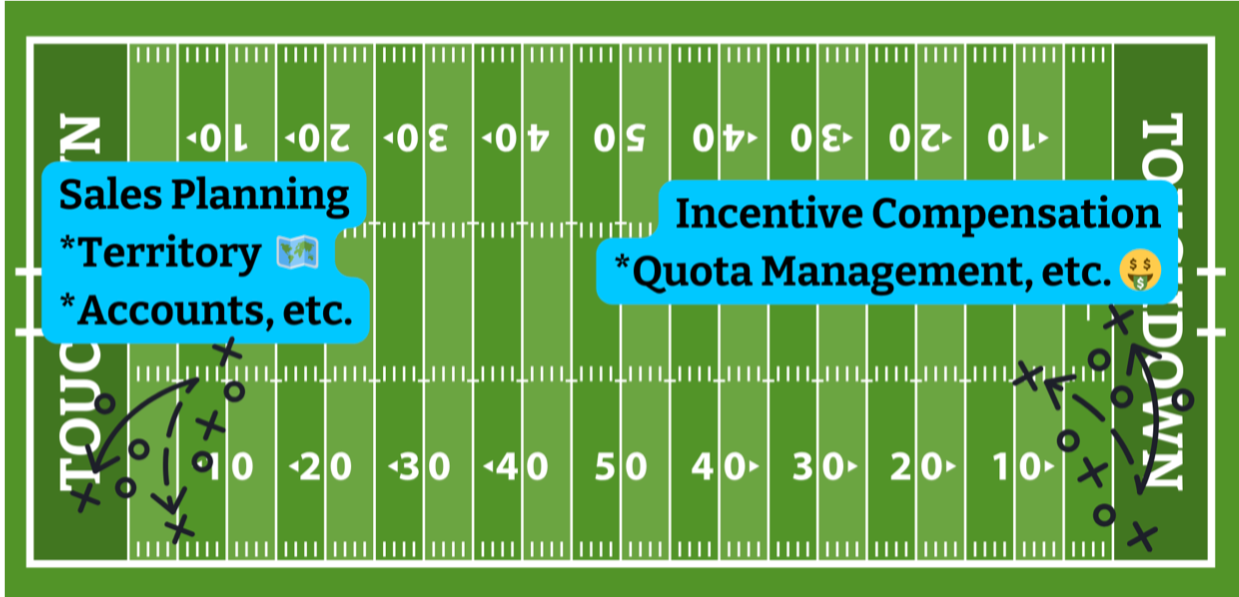
Think of SPM as a football field:
- End zone to end zone on the left: territory planning, quotas, comp plans.
- End zone to end zone on the right: results—did reps hit quota; what did we pay them?
Most teams cover those bookends. But games aren’t won in the end zones.
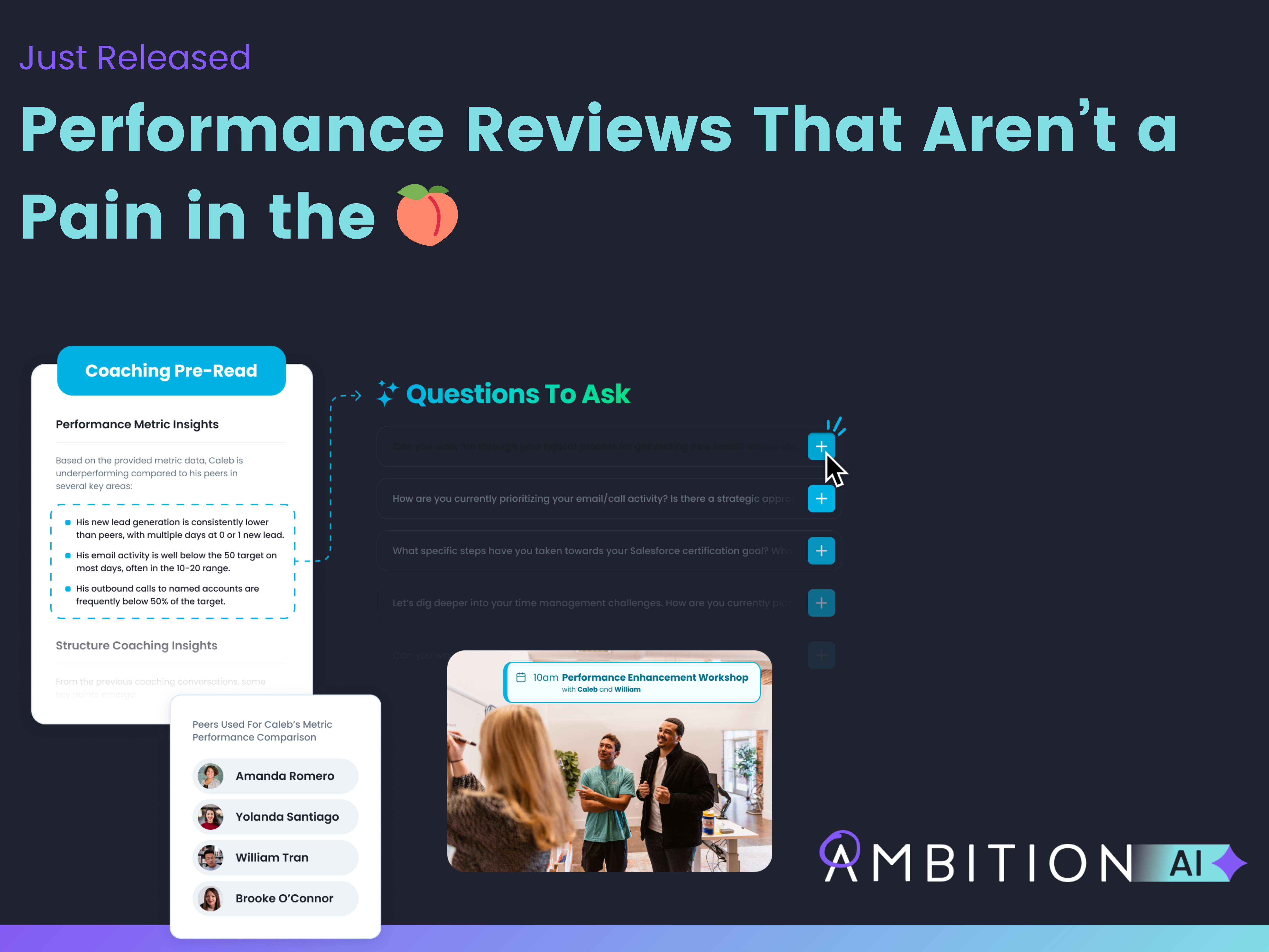
They’re won between the lines—where plays are called, adjustments are made, and coaches coach in real time.
When you coach consistently between the lines, you see reps level up, new managers get productive faster, and risks surfaced early enough to change the game plan. That’s exactly where the Sales Performance Gap lives: the middle of the field. And if you’re only managing the plan and the payout, you’re leaving your team stuck at midfield, hoping they find the end zone on their own.
What’s next
In this series, I’ll break down:
- The difference between legacy SPM and modern SPM.
- What a modern system needs to deliver.
- How to make the business case for closing the gap.
- Where the market is heading—and how Ambition is helping leaders get there.
Because at the end of the day, the gap isn’t just about lost revenue—it’s about frontline managers buried in busywork instead of coaching, reps drifting without clear expectations, and cultures that stall instead of thrive.
For now, ask yourself: Do you have a system for the middle of the field? Or are you still asking your team to win without coaching the plays?
If the middle of the field is where your team is stalling, it may be time to see what coaching between the lines could look like in practice. See Ambition in action.